
It’s a scenario almost every driver in San Antonio has faced. You’re cruising down Loop 1604, perhaps heading to a Spurs game or grabbing some brisket, and suddenly: ping: that little amber glow appears on your dashboard. The dreaded check engine light.
For many of us, that light is the ultimate mood killer. It’s an uninvited guest that brings a wave of anxiety: How much is this going to cost? Is my car going to stall in the middle of I-35? Can I just ignore it for another week?
At Absolute Auto Repair, we believe that knowledge is the best remedy for automotive anxiety. We’ve seen thousands of vehicles across San Antonio, and we’ve noticed that most drivers fall into a few common traps when it comes to that mysterious dashboard warning.
By understanding these mistakes, you can protect your “engine’s heart,” save yourself thousands of dollars in long-term repairs, and keep your vehicle reliable for years to come. Let’s dive into the most common check engine light mistakes and how you can avoid them.
1. The “Wait and See” Approach (Ignoring the Light)
The single biggest mistake any driver can make is simply ignoring the light. We get it: life is busy. You have work, family, and errands, and if the car “feels” fine, it’s tempting to pretend the light isn’t there.
However, your car’s computer (the PCM) is incredibly sophisticated. It’s connected to a network of sensors that act like the body’s nervous system. When the check engine light turns on, it’s your car’s way of saying, “Something isn’t right.”
Ignoring a minor issue, like a faulty oxygen sensor, can quickly lead to much bigger problems. An oxygen sensor that costs a couple of hundred dollars to replace might, if ignored, cause your engine to run “rich” (too much fuel). This excess fuel eventually burns out your catalytic converter: a repair that can easily climb into the thousands.
In our world, we like to say that a check engine light is an opportunity to save money. By catching a problem early through engine diagnostics in San Antonio, you prevent a “snowball effect” of mechanical failure.
2. Failing to Distinguish Between “Steady” and “Flashing”
Did you know that not all check engine lights are created equal? This is a crucial distinction that many drivers miss.
- A Steady Light: This means there is a problem that needs attention soon. You don’t necessarily need to pull over immediately, but you should schedule a diagnostic appointment as soon as possible.
- A Flashing Light: This is an emergency. A flashing check engine light usually indicates an “engine misfire” so severe that unburned fuel is being dumped into the exhaust system. This can cause immediate and permanent damage to your catalytic converter and even lead to an engine fire.
If your light is blinking, pull over safely and call for help. At Absolute Auto Repair, we offer mobile service convenience, meaning we can come to you to assess the situation before you risk driving a compromised vehicle across town.
3. The Forgotten Gas Cap Fix
Sometimes, the solution to a check engine light is so simple it’s almost frustrating. Your car’s fuel system is a closed, pressurized environment. This is part of the Evaporative Emission (EVAP) system, designed to keep gasoline vapors from escaping into the atmosphere.
If your gas cap is loose, cracked, or missing, the system will lose pressure, and the computer will trigger the check engine light.
Pro-Tip: If your light comes on shortly after you’ve visited the gas station, pull over and check your cap! Make sure it’s tightened until it clicks. If the cap was the issue, the light may stay on for a few more trips while the computer re-tests the system, but it will eventually turn off on its own. It’s the easiest “repair” you’ll ever perform.
4. Confusing a “Code” with a “Diagnosis”
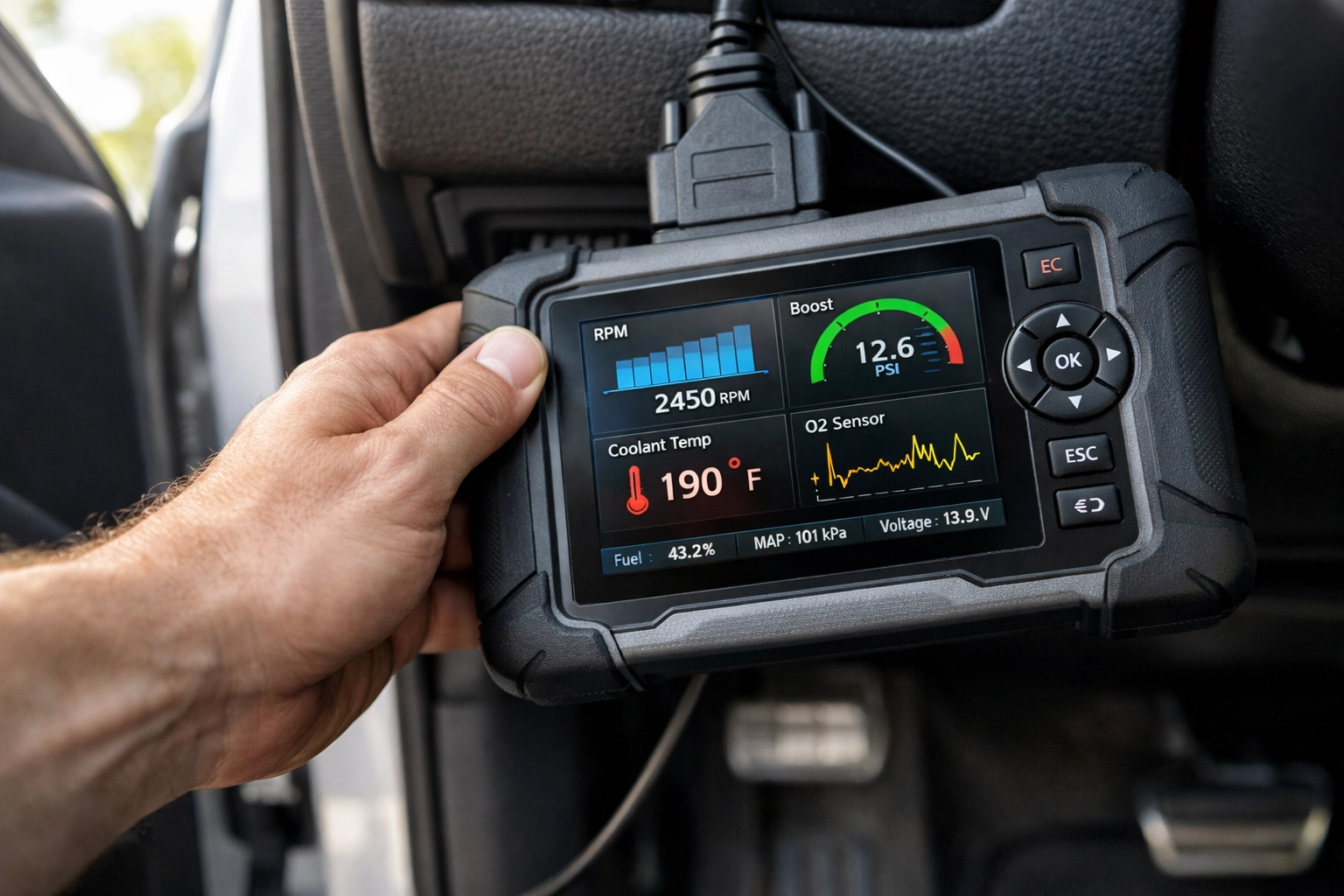
In the age of DIY, many people head to a local auto parts store to get their codes “read” for free. While this is a great first step, it is not a diagnosis.
A code reader might tell you “P0171 – System Too Lean.” This is like a doctor telling you that you have a fever. It tells you there’s a symptom, but it doesn’t tell you why. Is the fever caused by a flu? An infection? Heatstroke?
Similarly, a “Lean” code could be caused by:
- A vacuum leak.
- A dirty Mass Airflow (MAF) sensor.
- A failing fuel pump.
- Clogged fuel injectors.
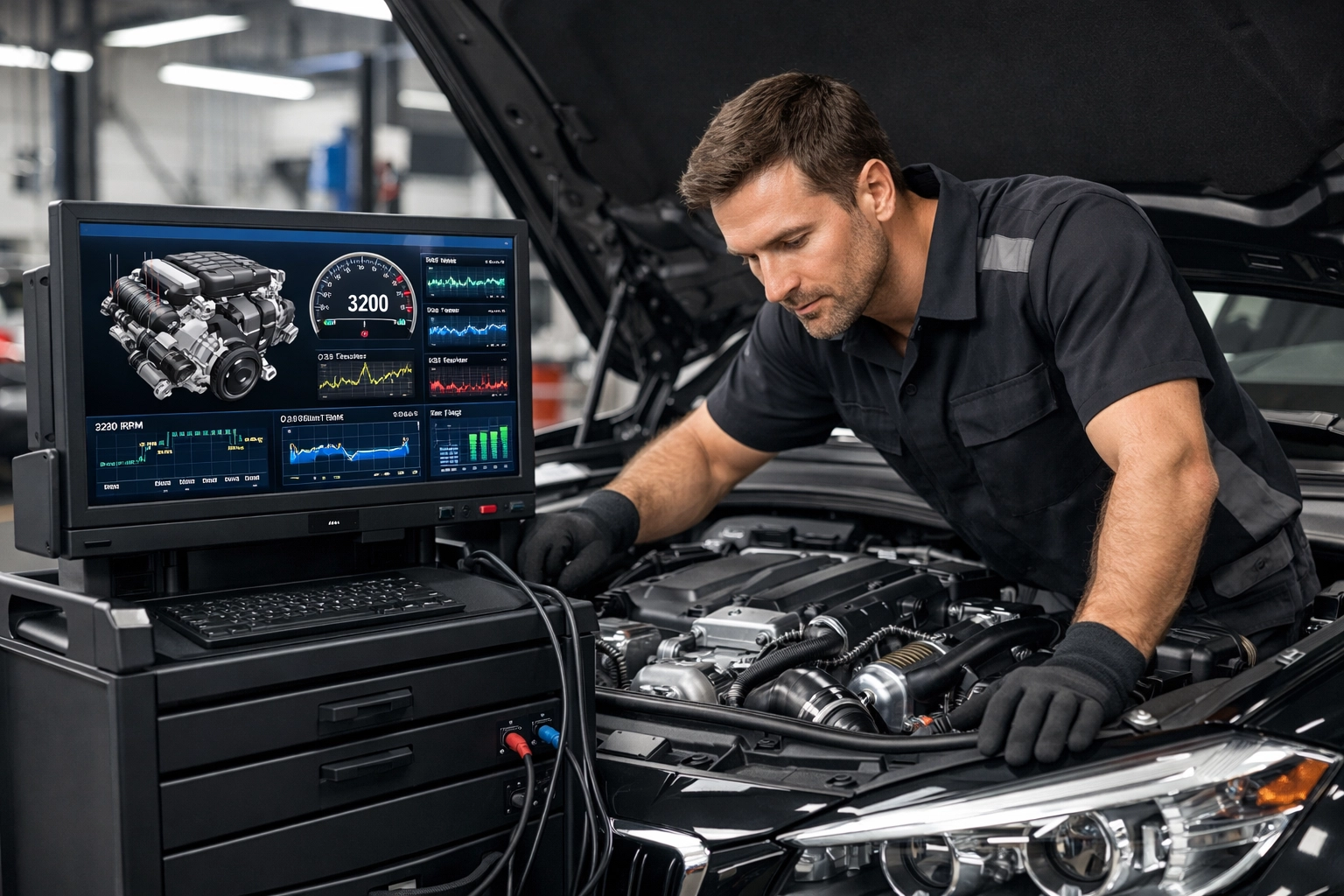
If you simply buy the part the code suggests without a proper engine diagnostic in San Antonio, you might waste money on a part you didn’t need. Our team uses advanced diagnostic tools that go beyond the code, looking at “live data” to see exactly how your engine is breathing and firing in real-time.
5. Neglecting the Routine Maintenance Schedule
Your engine is a high-performance machine that relies on clean fluids and fresh components to stay in sync. Many check engine lights are triggered by components that simply reached the end of their lifespan because maintenance was deferred.
- Spark Plugs: If you haven’t changed your spark plugs in 100,000 miles, they can begin to misfire, triggering the light.
- Oil Changes: Clean oil is the lifeblood of your engine. Old, dirty oil can cause issues with Variable Valve Timing (VVT) solenoids, which are very sensitive to debris. This will definitely pop that light on. Check out our guide on extending your engine’s life with oil changes.
- Air Filters: A clogged air filter restricts the “breathing” of your engine, leading to sensor errors and poor fuel economy.
Think of routine maintenance as your car’s “preventative vitamins.” A little investment now prevents a major “surgery” later.
6. Using the Wrong Type of Fuel or Oil
San Antonio heat is no joke, and your engine works extra hard during our blistering summers. Using the wrong viscosity of oil or low-quality fuel can sometimes lead to performance issues that trigger sensors.
Modern engines are designed with very specific tolerances. If your manual calls for synthetic 0W-20 oil and you use a thicker conventional oil, your engine’s internal sensors may detect a drop in efficiency or pressure. Similarly, using lower-octane fuel in a car designed for “Premium” can lead to “knocking” or “pre-ignition,” which the knock sensor will immediately report to the computer.
Why Absolute Auto Repair is Your Best Bet for Check Engine Light San Antonio Services
When that light comes on, you want honesty, speed, and accuracy. You don’t want a shop that’s going to guess with your money. Here is how we do things differently at Absolute Auto Repair:
Advanced Diagnostic Technology
We don’t just “pull codes.” We use dealership-level diagnostic equipment to perform deep dives into your vehicle’s systems. We look at fuel trim levels, sensor voltages, and ignition timing to pinpoint the exact root cause of the check engine light in San Antonio.
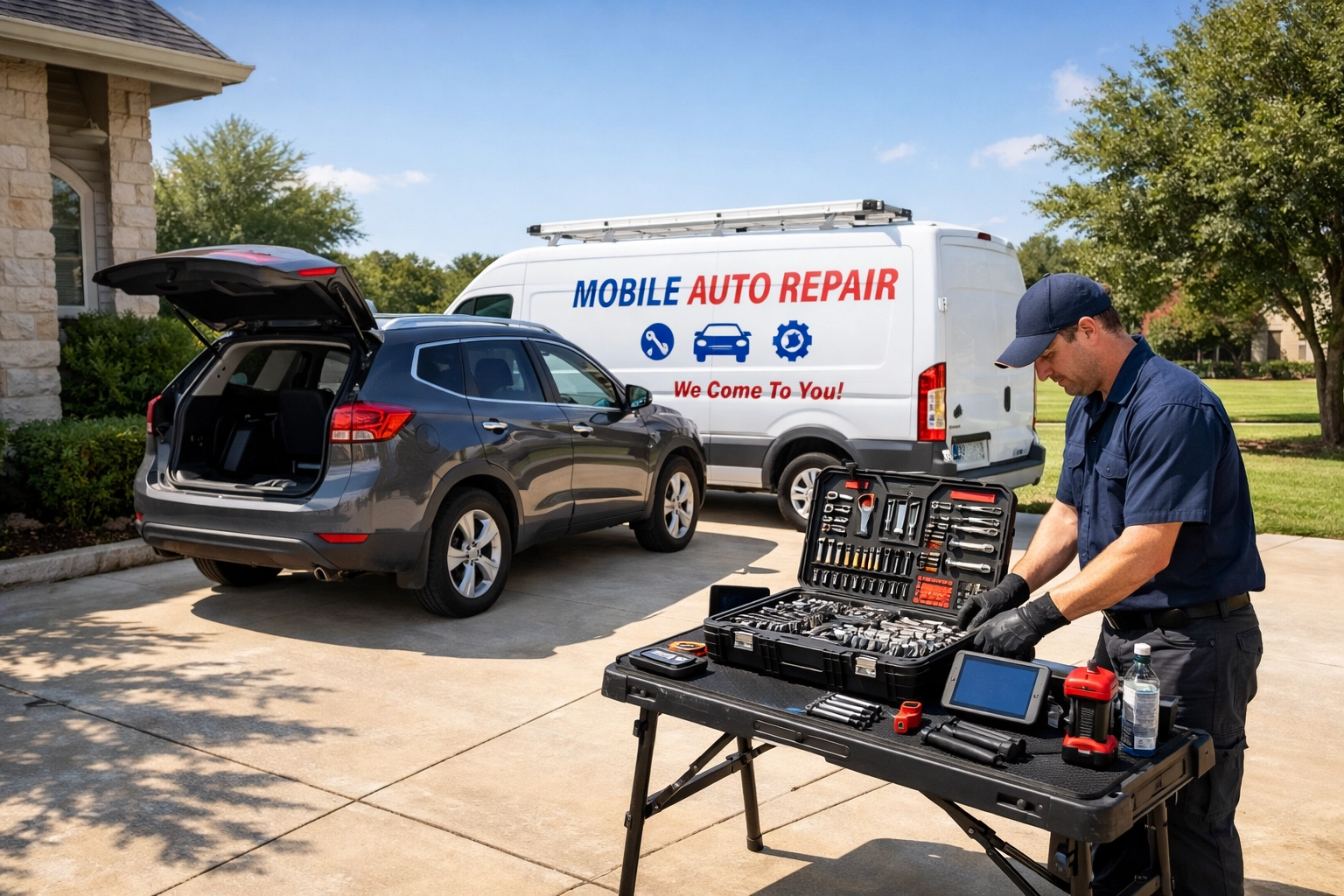
Mobile Service: We Come to You!
We know that your time is valuable. Driving a car with a warning light across San Antonio can be stressful. That’s why we offer mobile mechanic services. Whether you are at home in Stone Oak or at your office downtown, we can bring our diagnostic tools to your driveway. This eliminates the need for a tow truck and keeps your day on track.
Honest, Transparent Communication
Our “Helpful Expert” philosophy means we explain things in plain English. We won’t throw technical jargon at you to confuse you. We’ll show you the data, explain what’s wrong, and give you an honest priority list of what needs to be fixed now versus what can wait.
Don’t Let the Orange Glow Ruin Your Day
A check engine light isn’t the end of the world: it’s just a conversation starter between you and your car. By avoiding the mistakes of ignoring the light or trying to “part-swap” your way to a fix, you’re making the smart choice for your wallet and your safety.
If your light is on, or if your car just doesn’t feel quite right, let the pros handle it. We’ve built our reputation on being the most reliable source for automotive repair in San Antonio, TX.
Ready to get some peace of mind?
Don’t let a small sensor issue turn into a major engine overhaul. Contact Absolute Auto Repair today to schedule your professional engine diagnostic. Whether you visit us or we come to you, we’ll get to the bottom of that light and get you back on the road with confidence.
Call us or visit our Contact Us page to book your appointment!